
What is a Squint Eye?
Squint eyes (crossed eyes), known as strabismus in medical science, is a vision condition where one eye of a person may look straight while the other turns inward, outward, upward, or downward. This problem is generally observed in children, but it is also commonly seen in adults. Most people think that it's only a cosmetic concern, but the complication can affect vision and overall quality of life and can promote serious eye diseases if left untreated. Renuka Eye Institute, one of the best hospitals for squint eye treatment in Kolkata, specialises in comprehensive squint eye evaluation and correction for all age groups.
How does this disease occur?
Generally, six muscles around each healthy eye move it in coordination with the brain for visual outcomes. When this coordination is disturbed due to an issue with the movement of the eye muscles and nerves, this problem occurs and promotes several visual complications.
Causes of Crossed eyes
different factors responsible for the development of this disease:
- Congenital or Genetic Factors: Premature birth or problems with the mother during pregnancy. A person with a family history of this problem.
- Imbalance of Eye Muscles: Here, muscles around the eyes become too strong, too weak, or poorly coordinated and cause one eye to deviate.
- Brain–Eye Coordination Problem: If the brain becomes unable to send proper signals to the eye muscles, the eyes cannot move together.
- Uncorrected Refractive Errors: High spectacle power for correcting refractive vision errors.
- Eye Injury or Trauma: Injury or surgery in the eyes or brain.
- Neurological or Medical Conditions: Stroke, brain tumours, nerve palsy, diabetes, or infections.
Classification
This condition can be classified based on eye position, onset, control, nature, cause, frequency, fixation, and direction of deviation. Here, classification based on the direction of deviation is most important. The types are:
- Esotropia: Inward deviation of the eye.
- Exotropia: Outward deviation of the eye.
- Hypertropia:Upward deviation of the eye.
- Hypotropia: Downward deviation of the eye.
Impact in Everyday Life
Strabismus affects the overall quality of life through the following problems:
- Vision complications: The main effect is vision problems, and they may be serious.
- Difficulty in daily activities: Everyday work may become difficult due to weak eye coordination.
- Learning troubles: Children may face problems in reading and writing.
- Psychological effect: It can affect self-confidence and may create anxiety and stress in the mind.
- Problem in jobs: Adults may experience difficulties in getting a job because accurate vision is important in job selection.
- Social Impacts: Crossed eyes can affect eye contact and communication, which may lead to social discomfort or avoidance.
Symptoms
Common symptoms of strabismus include:
- Misaligned eyes in vision
- Double vision
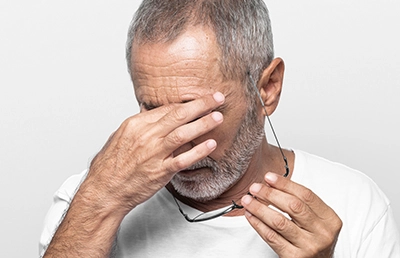
- Eye strain
- Headache or head tilting
- Blurred vision
- Closing or covering one eye
- Difficulty in reading and concentrating
- Irritation or eye fatigue
Serious eye diseases:
Strabismus promotes several serious eye complications, which can lead to permanent blindness if not treated promptly. The diseases are :
- Amblyopia (Lazy Eye): Here, the brain starts to ignore the visual response from the deviated eye, causing a permanent reduction of vision.
- Double vision (diplopia): Seeing double images of a single object permanently.
- Loss of Binocular Vision: Permanent loss of three-dimensional(3D) vision.
- Poor Depth Perception: Difficulty in judging distance, which can affect daily activities throughout life.
- Abnormal Head Posture: Long-term head tilting may happen, and it can lead to neck or posture problems.
Tests
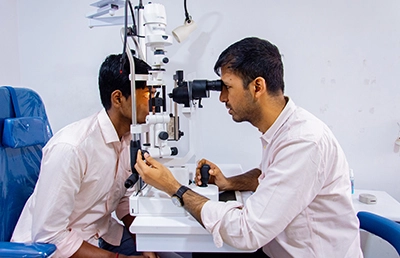
Medical detection of strabismus at an early age is essential for effective treatment. Usually, a squint specialist performs the following squint eye screenings-
- Visual Acuity Test
- Alternate Cover Test
- Hirschberg Test (Corneal Light Reflex Test)
- Krimsky Test
- Prism Bar Cover Test
- Ocular Motility Examination
- Worth Four Dot Test
- Refraction Test (Cycloplegic Refraction)
- Fundus Examination
- Synoptophore Test
Treatment for Strabismus
Early treatment is vital to prevent cross eyes-related serious eye diseases and improve cosmetic appearance because the visual system generally develops during childhood. Effective treatments for squint eyes include the following procedures based on the types and severity of the complication:
- Medications: Ophthalmologists often prescribe eye drops, oral pills, and injections in the treatment.
- Eyeglasses: Are also recommended by eye doctors for correcting refractive vision errors to treat crossed eyes.
- Prism Lenses: Eye care professionals use these special lenses for strabismus patients to treat this visual disorder.
- Vision Therapy: Many vision therapies are performed by eye specialists in this treatment.
- Eye Surgery: Eye surgeons may go for surgeries to correct eye alignment by adjusting the position of the eye muscles when non-surgical methods cannot work effectively. Presently, the following procedures of squint eye surgery are easily available in Kolkata:
- Recession Surgery
- Resection Surgery
- Plication Surgery
- Adjustable Suture
- Tucking Surgery
- Faden Surgery
- Vertical Muscle Surgery
- Oblique Muscle Surgery
Exercise
Regular practice of the following eye exercises, recommended by eye experts or pediatric ophthalmologists, can play a supportive role in improving eye coordination and visual results.
Pencil Push-Ups:
Hold a pencil at arm's length and focus on it. Therefore, slowly move it towards the nose and then move it back out. Repeat multiple times a day to improve convergence.
Barrel Cards:
Fix a card with a concentric circle against your nose and focus on it from the far barrel to the near barrel. It helps your eyes to work together.
Brock String Exercise:
Take a string with colored beads at your eye level and focus on each bead along the string. It improves eye teaming and depth perception.
Near and Far Focus:
It is performed by focusing between a near object and a distant one alternately. It enhances the focusing abilities of the eyes.
Prevention
While crossed eyes cannot be prevented easily, the following preventive measures can help to reduce complications and detect the disorder early for effective treatment.
- Eye exam in early childhood
- Consultation with eye doctors
- Regular eye exercises
- Follow a healthy dietary plan and drink enough water
- Reduce screen time and give your eyes proper rest
- Use protective eyewear
Who are at a risk
- Children whose mothers had complications during pregnancy, premature babies, and infants with refractive errors
- People with a family history of crossed eyes
- Persons with neurological disorders
- Adults with stroke, diabetes, or nerve palsy
- Persons with previous eye surgery or injury
- People with weak eye muscles or nerves
Myth vs. Fact
| Myth | Fact |
|---|---|
| It's just a cosmetic issue. | A vision condition that affects the overall quality of life. |
| It will resolve on its own with age. | Most cases need medical treatment. |
| It's only a congenital problem. | Only occurs due to poor eye-brain coordination and is not contagious. |

Conclusion
This complication needs immediate medical attention, and wasting time by believing in myths can delay effective treatment. If you or your loved one has this problem, book an appointment at Renuka Eye Institute, the best eye hospital in Kolkata, to take perfect steps towards better vision. We combine expertise, advanced technology, experienced and qualified ophthalmologists, compassionate care and reasonable squint surgery cost to ensure the best strabismus treatment in Eastern India.